


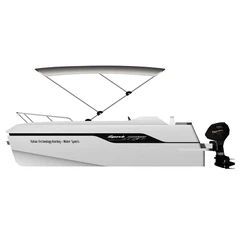
The historical background and development of leisure boats can be traced back to the mid-17th century, when King Charles II of England received a finely crafted royal hunting and fishing boat, which is considered to be the first yacht in history. At first, yachts were mainly used by nobles and wealthy people in European maritime countries to show off themselves and show their status. With the passage of time, yachts gradually evolved from toys of the nobility to tools of mass entertainment. The design and manufacturing technology of yachts underwent revolutionary changes in the 19th century. The emergence of new materials such as fiberglass has significantly improved the construction technology of yachts, and yachts have gradually become popular. Entering the 21st century, the yacht industry has ushered in unprecedented development opportunities. The advancement of science and technology has provided more possibilities for the design and manufacture of yachts. Modern yachts not only pay more attention to personalization, comfort and environmental protection in design, but also realize intelligence and automation in power, navigation, communication and other aspects. The current situation of the global leisure boat market shows that the United States is one of the largest leisure boat markets. According to the classification of the U.S. Coast Guard, American recreational boats include 10 major categories, including open powerboats, cabin powerboats, flat-bottom boats, jet skis, sailboats, rowing boats, kayaks, canoes, and paddle boards. In 2020, the retail volume of recreational powerboats in the United States exceeded 310,000, and the market size reached US$30.792 billion, with huge room for future growth. In addition, the development of the recreational boat market is inseparable from the rise of water leisure sports. Many emerging water leisure sports such as kayaking and paddle boards are widely popular.
Historical background and development of leisure boats
Nov 28, 2024
Leave a message